 CodeMaster Academy
Frontend vs Backend Developer: What's the Difference?
Introduction
Choosing a career path in web development often comes down to a key decision: should you become a frontend developer or a backend developer? While a previous article on this site explored the technical differences between frontend and backend development as disciplines, this article focuses specifically on the career and role differences — what a day in the life looks like for each developer, what skills employers expect, salary considerations, and how to decide which career path suits your personality and strengths.
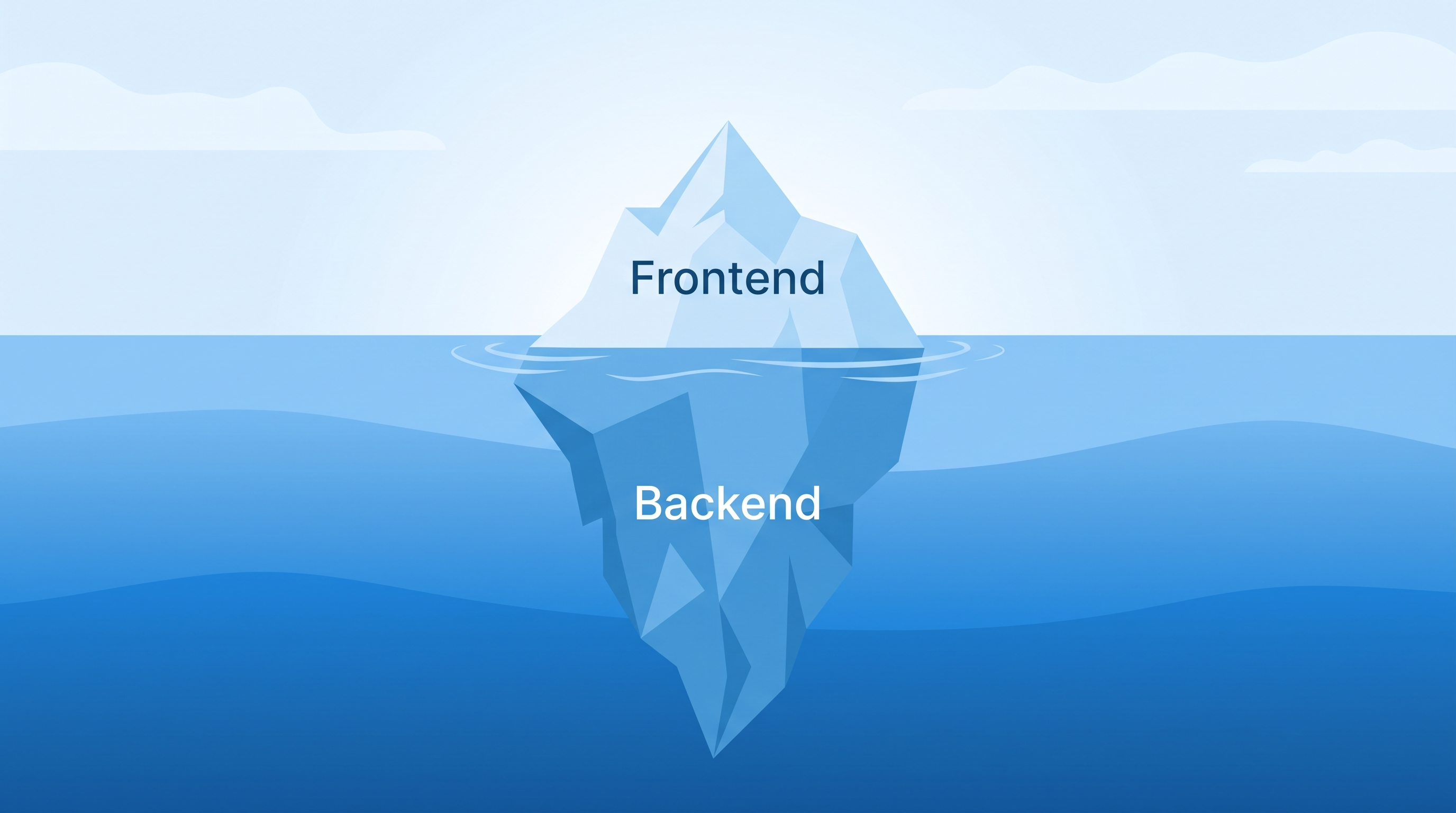
A frontend developer is the person responsible for everything users see and interact with directly — the layout, the buttons, the smooth scrolling, the way a page adjusts on a mobile phone versus a desktop monitor. A backend developer works behind the scenes, building the servers, databases, and logic that power the application without ever being directly visible to the end user.
Both roles are essential, well-paid, and in consistent demand across the tech industry, but they attract very different types of thinkers. This article will help you understand what each role actually involves day-to-day, so you can make a more informed decision about which path to pursue, or confirm that full-stack development — combining both — might be the right fit for you.
How to Use This Guide
- Read the "Day in the Life" sections for both roles to get a realistic picture of daily work.
- Review the required skill sets for each role to assess your current strengths.
- Check the personality fit section to see which role aligns with how you naturally think.
- Compare the career growth paths to understand long-term opportunities in each role.
- Explore the salary and demand section for practical career planning insight.
- Reflect honestly on which daily tasks sound more appealing to you personally.
- Consider trying small projects in both roles before fully committing to one path.
A Day in the Life of a Frontend Developer
A frontend developer's day typically starts by reviewing design mockups from a designer, often created in tools like Figma, and translating them into functional code using HTML, CSS, and JavaScript frameworks like React or Vue. Much of the day involves fine-tuning layouts, ensuring buttons respond correctly to clicks, and testing how a page looks across different browsers and screen sizes.
Frontend developers frequently collaborate closely with UI/UX designers, product managers, and backend developers to ensure the final product looks polished and functions smoothly. A significant part of the role involves debugging visual inconsistencies — for example, why a button looks perfect on desktop but breaks on a mobile screen — and continuously refining the user experience based on feedback.
A Day in the Life of a Backend Developer
A backend developer's day typically involves working with server-side code, databases, and APIs that power the application's core functionality. This might include designing database schemas, writing endpoints that the frontend can call to fetch or submit data, optimizing slow database queries, or implementing security measures like user authentication.
Backend developers often spend significant time thinking about scalability — how will the system perform when thousands, or millions, of users interact with it simultaneously? They also focus heavily on data integrity and security, ensuring sensitive information like passwords and payment details are handled safely. Collaboration with frontend developers is common, as both sides must agree on how data will be structured and exchanged through APIs.
Required Skills Comparison
| Skill Area | Frontend Developer | Backend Developer |
|---|---|---|
| Core languages | HTML, CSS, JavaScript | Python, Java, PHP, Node.js, Ruby |
| Frameworks | React, Vue, Angular | Django, Spring, Express, Rails |
| Design sense | Strong visual/UX awareness needed | Less emphasis on visual design |
| Database knowledge | Basic understanding helpful | Deep knowledge required |
| Security focus | Moderate (input validation, XSS prevention) | High (authentication, data protection) |
| Problem-solving style | Visual, iterative, user-focused | Logical, systems-focused, data-driven |
Personality Fit: Which Role Suits You?
Frontend development tends to attract people who enjoy visual creativity, design aesthetics, and immediate, tangible feedback from their work — you make a change, and you can literally see the result instantly in the browser. If you enjoy thinking about how things look and feel, and you're drawn to the intersection of design and code, frontend development might be a natural fit.
Backend development tends to attract people who enjoy logical problem-solving, systems thinking, and working with abstract structures like databases and algorithms. If you find satisfaction in optimizing how something works internally, even if it's invisible to the end user, and you enjoy thinking about efficiency, security, and scalability, backend development might suit you better.
Neither preference is better than the other — they simply reflect different ways of thinking that are both equally valuable in building complete applications.
Career Growth Paths
Frontend developers can progress toward roles like Senior Frontend Developer, UI/UX Engineer, Frontend Architect, or even transition into product design roles given their strong overlap with user experience thinking. Specializing in specific frameworks like React or Vue can also lead to highly sought-after specialist positions.
Backend developers can progress toward roles like Senior Backend Developer, Database Administrator, DevOps Engineer, or Backend Architect. Many backend developers also transition into cloud infrastructure or systems architecture roles as they gain experience with scalability and distributed systems.
Both paths can eventually lead to Full-Stack Developer roles, Engineering Manager positions, or specialized leadership roles like CTO, depending on individual career goals and interests.
Features of Each Role
- Frontend developers focus on translating designs into interactive, functional interfaces
- Backend developers focus on building robust, secure, and scalable server-side systems
- Frontend roles require strong collaboration with designers and product teams
- Backend roles require strong collaboration with database administrators and DevOps teams
- Frontend developers must stay updated on evolving browser standards and frameworks
- Backend developers must stay updated on security practices and database technologies
- Both roles increasingly overlap with cloud services and deployment practices
- Frontend work often involves rapid, visual iteration and testing cycles
- Backend work often involves careful planning around data structure and system architecture
- Both roles commonly use Git for version control and team collaboration
Benefits of Becoming a Frontend Developer
- Immediate, visual feedback makes learning and daily work feel rewarding
- Strong demand across virtually every industry that has a website or app
- Opportunities to blend technical skills with creative design thinking
- Clear specialization paths through popular frameworks like React
- Skills transfer well into related fields like UI/UX design
Benefits of Becoming a Backend Developer
- Deep, transferable skills in logic, databases, and systems architecture
- Strong demand in industries requiring complex data processing, like finance
- Clear pathways into specialized, high-paying roles like DevOps or cloud architecture
- Opportunities to work on large-scale, high-impact technical challenges
- Skills transfer well into related fields like data engineering and systems design
Common Use Cases
- A frontend developer building a responsive product page for an e-commerce site
- A backend developer designing a secure payment processing API
- A frontend developer optimizing a website's loading speed and animations
- A backend developer scaling a database to handle increased user traffic
- A frontend developer ensuring accessibility compliance for users with disabilities
- A backend developer implementing user authentication and authorization systems
- A frontend developer collaborating with designers on a new app redesign
- A backend developer building a recommendation engine using stored user data
- A frontend developer debugging cross-browser compatibility issues
- A backend developer setting up automated backups for critical business data
Frequently Asked Questions
1. Which role earns a higher salary, frontend or backend developer?
Salaries vary by company and location, but backend and full-stack roles sometimes command slightly higher pay due to increased system complexity, though this isn't a strict rule.
2. Can I switch from frontend to backend development later in my career?
Yes, many developers transition between roles or become full-stack developers as they gain broader experience over time.
3. Which role has more job openings currently?
Both roles maintain strong, consistent demand, though specific numbers can vary by region and industry trends.
4. Do frontend developers need to understand databases?
A basic understanding is helpful for effective collaboration, but deep database expertise is generally not required for frontend roles.
5. Is backend development more difficult than frontend development?
Difficulty is subjective and depends on your personal strengths — some find backend logic more challenging, while others struggle more with frontend design nuances.
6. What is a full-stack developer's role compared to these two?
A full-stack developer combines both frontend and backend responsibilities, capable of building complete applications independently.
7. Which role is better suited for remote work?
Both roles are highly compatible with remote work, as most development tasks can be performed independently using cloud-based tools and version control.
8. Do backend developers need design skills?
Generally no, though a basic understanding of how frontend systems consume data can improve collaboration and API design decisions.
9. Which role should I choose if I'm unsure of my strengths?
Try small projects in both areas early on — building a simple webpage for frontend and a simple API for backend — to see which feels more natural and enjoyable.
10. Can frontend and backend developers work independently of each other?
While possible for very small projects, most real-world applications require close collaboration between frontend and backend developers to function properly.
Interview Preparation Differences
Technical interviews for frontend and backend developer roles tend to focus on quite different areas, which is worth understanding as you prepare for a job search. Frontend interviews often include practical coding challenges around building specific UI components, questions about browser rendering behavior, responsive design principles, and sometimes live coding sessions where you build a small interactive feature from a design mockup. Interviewers frequently assess your attention to detail regarding accessibility, cross-browser compatibility, and overall user experience.
Backend interviews, by contrast, tend to emphasize data structures and algorithms more heavily, along with system design questions about how you would architect a scalable application, design a database schema, or handle high volumes of concurrent requests. Questions about API design, security best practices, and database query optimization are common, since these directly reflect the day-to-day responsibilities of the role.
Understanding these differences early in your career planning allows you to tailor your practice and preparation more effectively, rather than generically studying "programming interview questions" without considering which specific skills your target role will actually emphasize.
Combining Both: The Full-Stack Path
Some developers ultimately decide not to choose between frontend and backend at all, instead pursuing full-stack development, where they build competency across both areas. This path offers greater flexibility, since full-stack developers can work independently on smaller projects or startups where hiring separate specialists isn't practical. It also provides a broader perspective that can be valuable even if you eventually specialize more heavily in one direction.
The tradeoff is that full-stack developers often need more time to reach the same depth of expertise in either area compared to specialists who focus exclusively on one side. Many successful full-stack developers describe their journey as starting with a strong focus on one area first — often frontend, due to its immediate visual feedback — before gradually building backend skills over time as their projects and career naturally demanded it.
Why Choose CodeMaster Academy?
CodeMaster Academy provides free-forever tools tailored to support both frontend and backend developers throughout their career journey, with no registration required. Every tool runs securely in your browser, keeping your data private while remaining fast and reliable for daily practice. Our mobile friendly, easy-to-use platform ensures you can sharpen your skills whether you're coding on a desktop at your internship or reviewing concepts on your phone. Wherever your development career takes you, CodeMaster Academy is here to support your growth with practical, accessible tools.
Last Updated: July 2026
Conclusion
Choosing between becoming a frontend or backend developer ultimately comes down to understanding your own strengths, interests, and the type of problem-solving that genuinely excites you. Frontend developers thrive on visual creativity and immediate feedback, while backend developers thrive on logical systems thinking and building robust, scalable infrastructure. Both career paths offer strong job prospects, meaningful growth opportunities, and the chance to build technology that impacts real users every day. If you're still unsure, don't be afraid to explore both through small projects before making your final decision — many great developers discover their true passion only after hands-on experimentation.